Something Wild: Ray Liotta in Black Leather and Black Watch Plaid
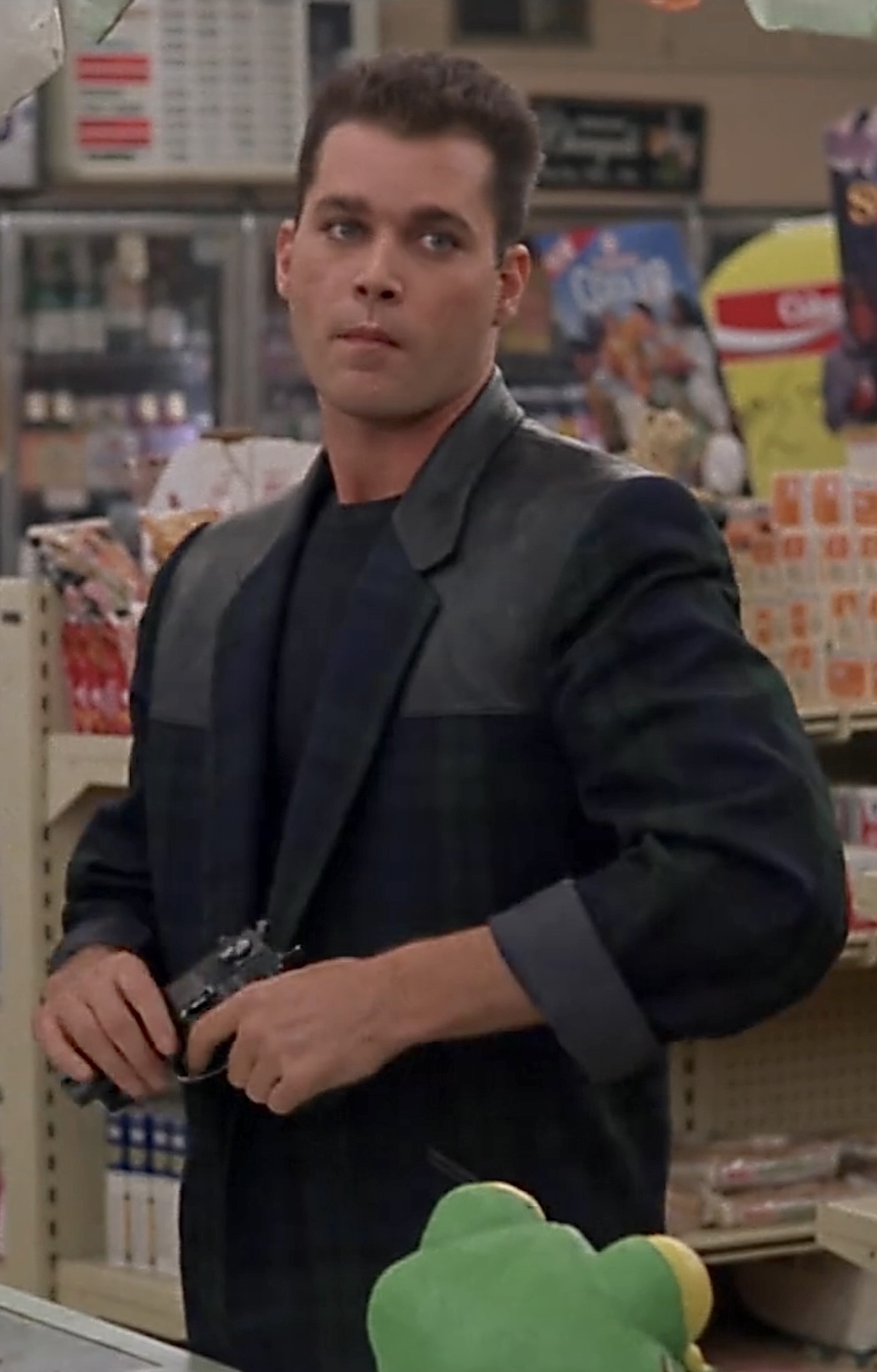
Ray Liotta in Something Wild (1986)
Vitals
Ray Liotta as Ray Sinclair, volatile ex-convict
Pennsylvania to Virginia, June 1986
Film: Something Wild
Release Date: November 7, 1986
Director: Jonathan Demme
Costume Designer: Norma Moriceau
WARNING! Spoilers ahead!
Background
Three years after his film debut in the 1983 box-office bomb The Lonely Lady, Ray Liotta made a more explosive impact through his Golden Globe-nominated breakthrough performance in Jonathan Demme’s darkly comic thriller Something Wild, released 40 years ago today on November 7, 1986.
The film follows uptight banker Charlie Driggs (Jeff Daniels) on an impulsive adventure with the free-spirited “Lulu” (Melanie Griffith), who seduces him into abandoning his old yuppie life. Their larcenous escapades lead them to her Pennsylvania hometown, where she introduces Charlie to her mother as her husband. They continue this romantic charade that evening at her high school’s ten-year class reunion, where they encounter Lulu’s devilish ex-husband Ray Sinclair (Ray Liotta).
Liotta recalls that after years of playing “a dead body on a soap opera,” his family and friends urged him to leverage his acting classmate Griffith to score a shot in her upcoming film. Already impressed with Liotta and dissatisfied with the actor already cast as Ray, Griffith had no qualms about asking Demme to give Liotta a chance. The rest is history, as Liotta’s chaotic charisma tore through Something Wild‘s second half and resulted in a handful of award nominations, launching his career through subsequent roles in enduring films like Field of Dreams (1989) and Goodfellas (1990).
What’d He Wear?
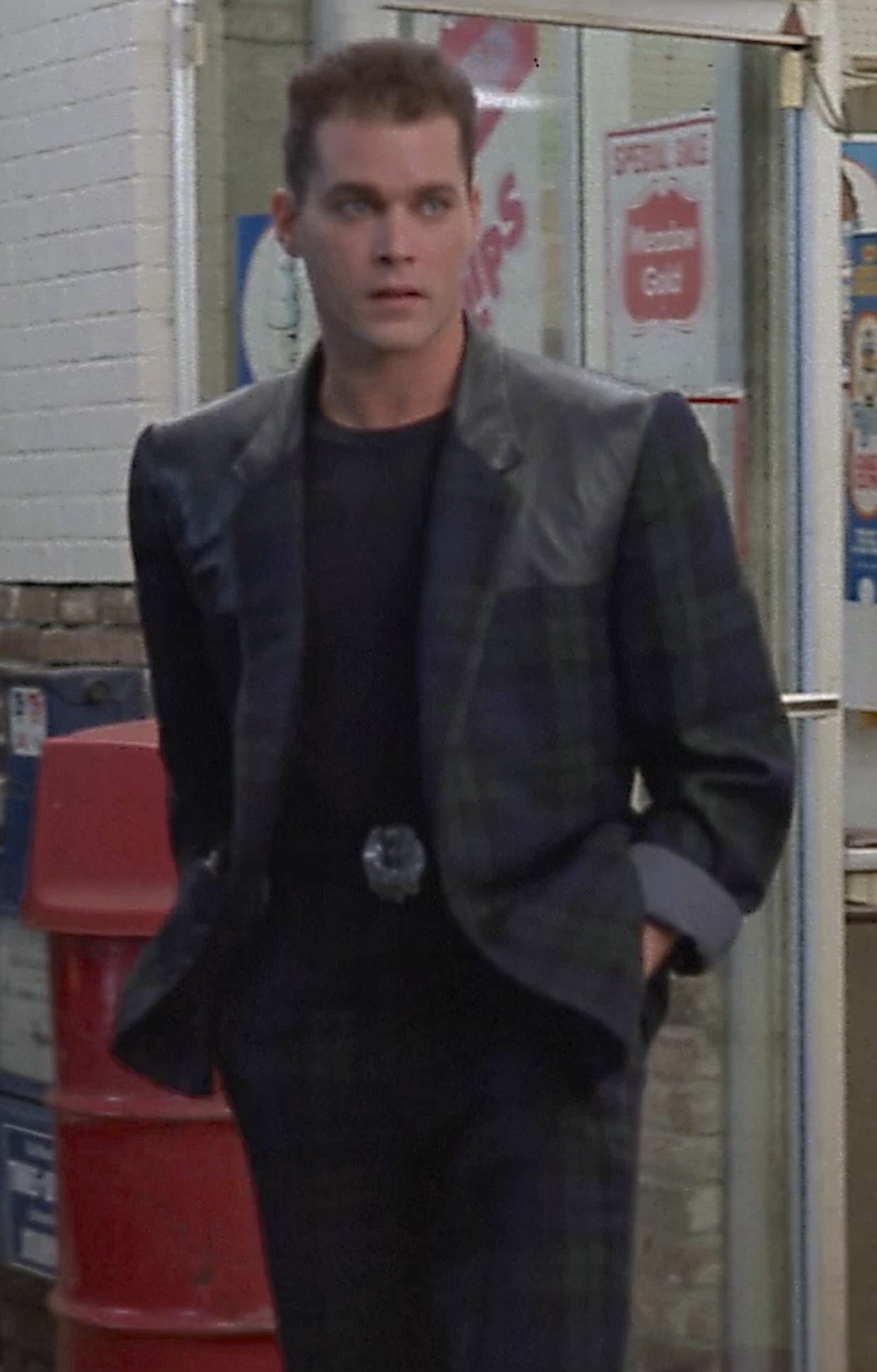
Ray styles himself in the spirit of 1950s rockabilly bad boys, eschewing conventional tailoring at his class reunion in favor of an unconventional suit that blends black leather accents with traditional Black Watch plaid. This Scottish tartan is distinguished by its subdued interplay of dark green and navy-blue checks, overlaid with intersecting black stripes of varying widths.
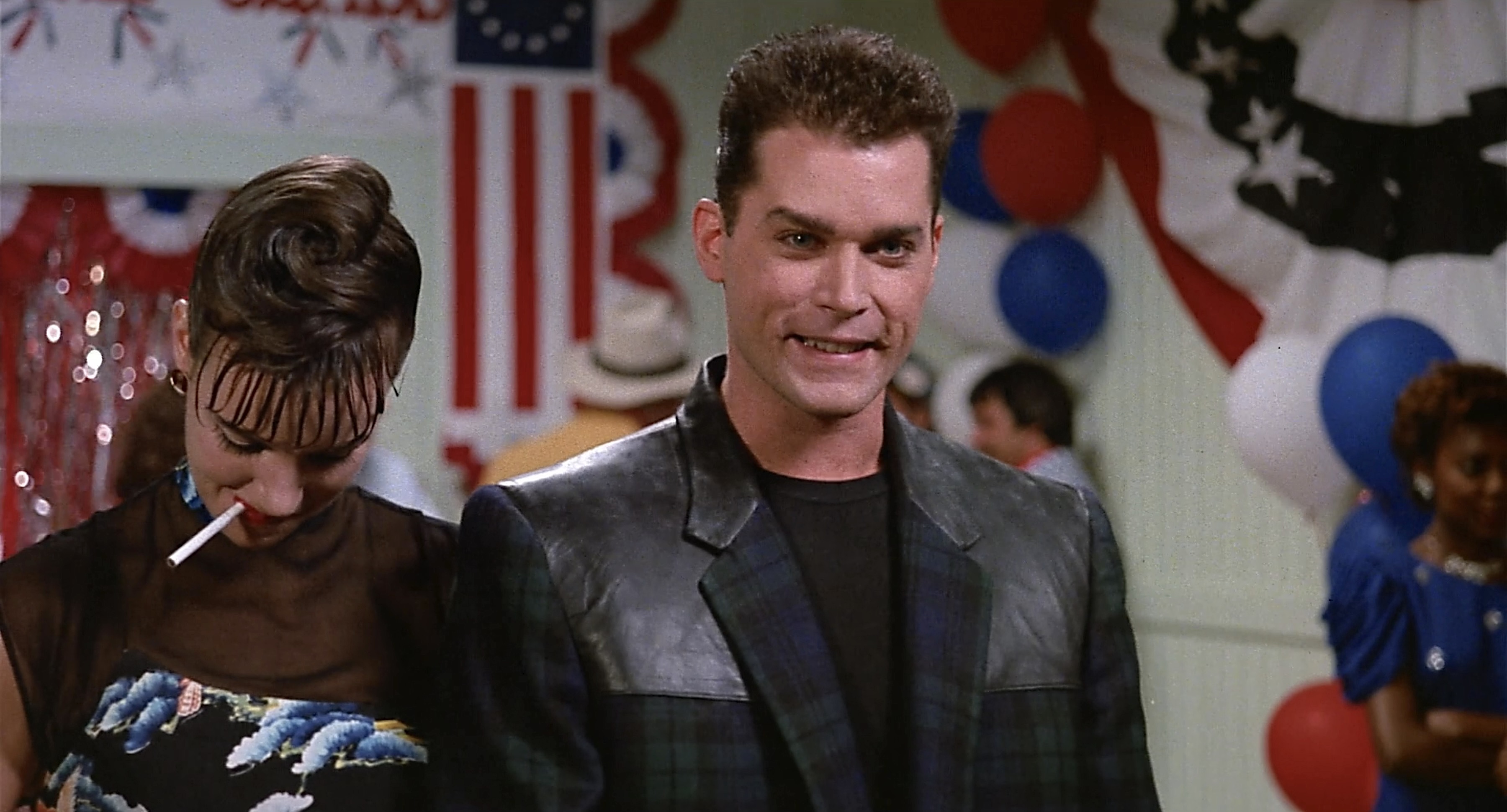
This idiosyncratic combination of tartan and leather is most evident on Ray’s single-breasted suit jacket, which features a black leather collar over the narrow notch lapels and a matching Western-style shoulder yoke. The leather yoke cuts straight across the front of the chest and is shaped with a shallow point across the back. The only external pockets are slanted over Ray’s hips, jetted in black leather to coordinate with the collar and yoke.
The ventless jacket follows a then-fashionable full cut, framed by broad shoulders with roped sleeveheads and a low single-button stance that Ray always wears open. The sleeves appear to have plain cuffs, which Ray folds up his forearms—a contemporary styling practice popularized by Don Johnson’s relaxed tailoring on Miami Vice.
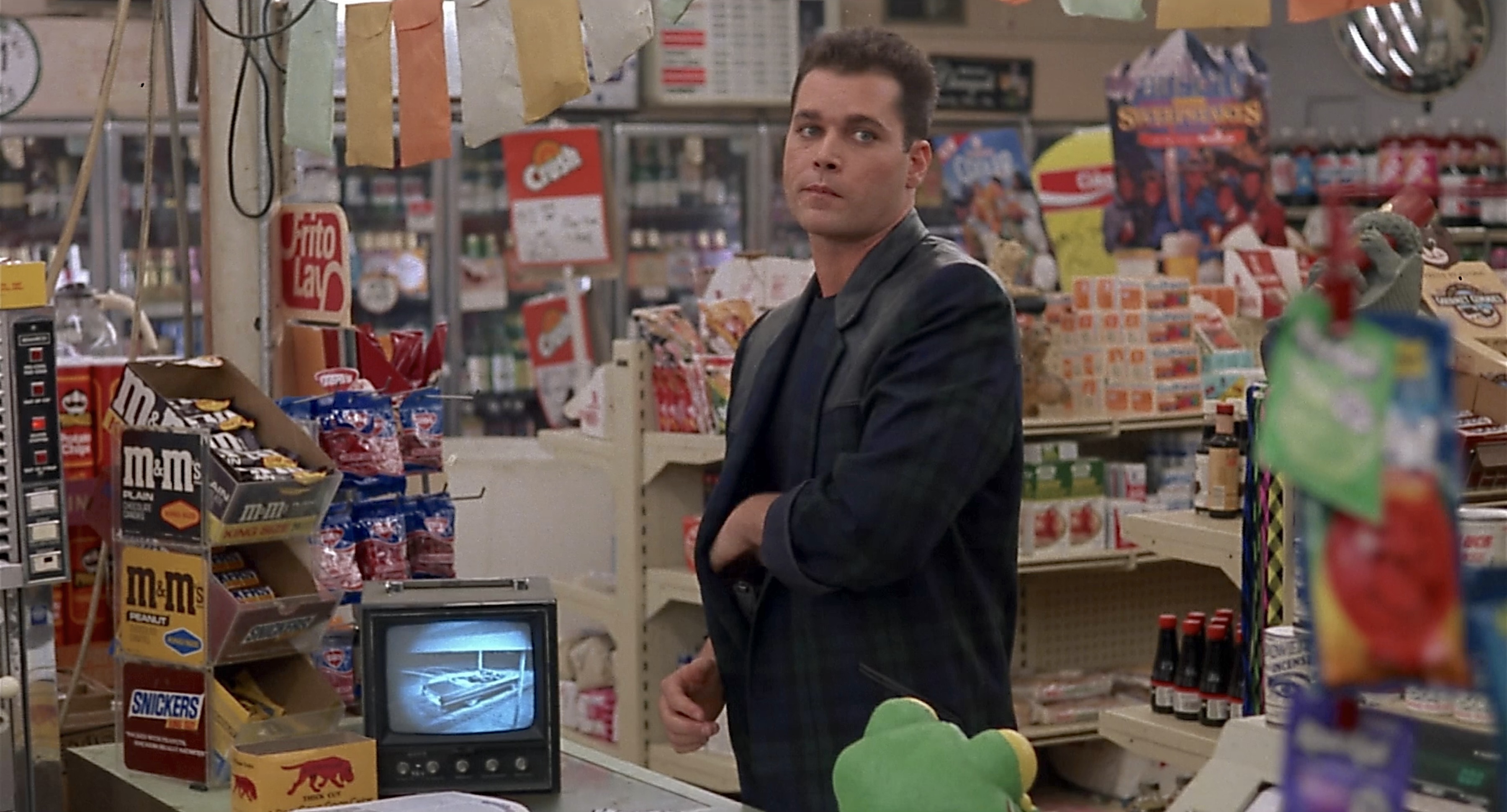
While a collared shirt could effectively complement such offbeat tailoring, Ray keeps his look brutally simple with one of his go-to plain black T-shirts. The cotton crew-neck shirt clings to Ray’s athletic frame, with short, close-fitting sleeves straight out of Marlon Brando’s 1950s wardrobe, effectively chosen to show off his biceps and the violent “bleeding heart” tattoo on his right arm.

Ray further demonstrates his unconventional approach to dressing for the occasion by pairing the jacket with matching Black Watch tartan trousers. These flat-front trousers are otherwise styled conventionally, with side pockets, jetted back pockets, and belt loops. Through the latter, Ray wears his usual black leather belt, fastened by a large, ornate silver-toned Western buckle with dramatic wing-like detailing surrounding a jade green-accented central motif.

Ray maintains the outfit’s outlaw character with a pair of black leather pointed-toe cowboy boots, flashily finished with silver toe tips and heel plates. The vamps feature traditional bug-and-wrinkle stitching, while the black leather soles are raised on dramatically stacked, slanted cowboy heels.

The next day, Ray has changed into black jeans that effect a villainously monochromatic look with his tucked-in T-shirt and boots. These jeans follow a traditional five-pocket layout and should be easily identifiable by the small white-lettered red tab sewn along the top of the back-right pocket… but that doesn’t mean I’ve actually been able to definitively ID them. The branding rules out the “big three” of American denim—Levi’s, Lee, and Wrangler—while also inconsistent with more fashion-forward brands of the ’80s like Guess, Jordache, or Sasson. My strongest candidate would be Rustler, a budget label introduced by Wrangler’s parent company Blue Bell in 1979… though most Rustler jeans I’ve seen from this era position this brand label above the pocket rather than along the top.

The next morning, Ray is piloting his Cadillac south into Virginia, now sporting a pair of black acetate-framed sunglasses. Though the frames are never shown clearly enough to establish their manufacturer, their trapezoidal shape suggests the iconic Ray-Ban Wayfarer model, designed by Raymond Stegeman in 1952. After declining in popularity through the late 1960s and ’70s, Wayfarers enjoyed a dramatic revival during the ’80s, aided by appearances in films like The Blues Brothers (1980) and Risky Business (1983). The latter was among the most successful examples of Ray-Ban’s Hollywood product-placement strategy, supported by a reported $50,000 annual arrangement beginning in 1982.

The Car
A few years before another Ray Liotta character would speed a Cadillac Coupe de Ville through suburban Queens to the sounds of Harry Nilsson, Muddy Waters, George Harrison, and the Stones in Goodfellas, Ray Sinclair drives a massive matte-black 1968 Cadillac De Ville convertible in Something Wild. This was the third generation of the De Ville since it became a distinct Cadillac model series in 1959, when the marque’s extravagant tailfins were at their peak. While these fins shrunk through the ’60s, little else about the De Ville did.
Introduced in 1965, the third generation De Ville was built on the same 129.5-inch wheelbase as the previous generation, itself only a half-inch shorter than the ’59 intro models. 1968 was the first year of the expanded 472 cubic-inch (7.7L) OHV V8 engine, rated at 375 horsepower and mated to GM’s three-speed Turbo-Hydramatic automatic transmission. This would be the final De Ville generation to offer a convertible, which was discontinued after the 1970 model year.
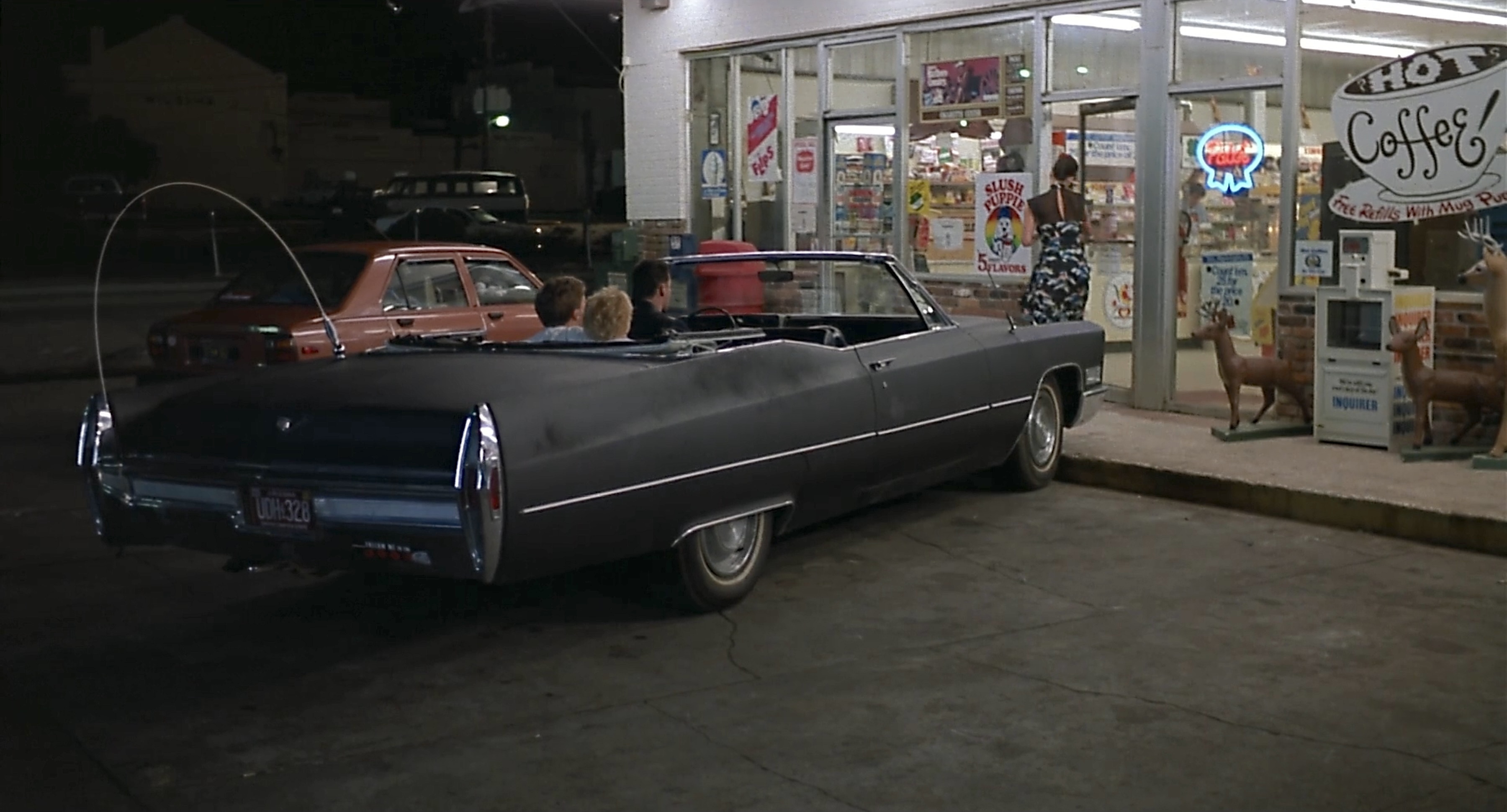
Ray’s vintage Cadillac convertible with its primer black paint job and extended antenna reinforces his rebellious rockabilly image.
What to Imbibe
Seagram’s Seven Crown is arguably the official whiskey of Something Wild, originally purchased by Lulu who didn’t seem to mind being given American blended whiskey despite her request for “four pints of Scotch” in a liquor store. Seagram’s introduced Seven Crown in 1934 to regain its market foothold after Prohibition ended in the United States. This 80-proof whiskey grew especially popular during the 1970s as half of the Seven-and-Seven highball that mixed it with 7 Up soda. Our trio at the core of Something Wild drinks it straight, with Ray downing pints behind the wheel of his Cadillac and offering his own bottle to Charlie.
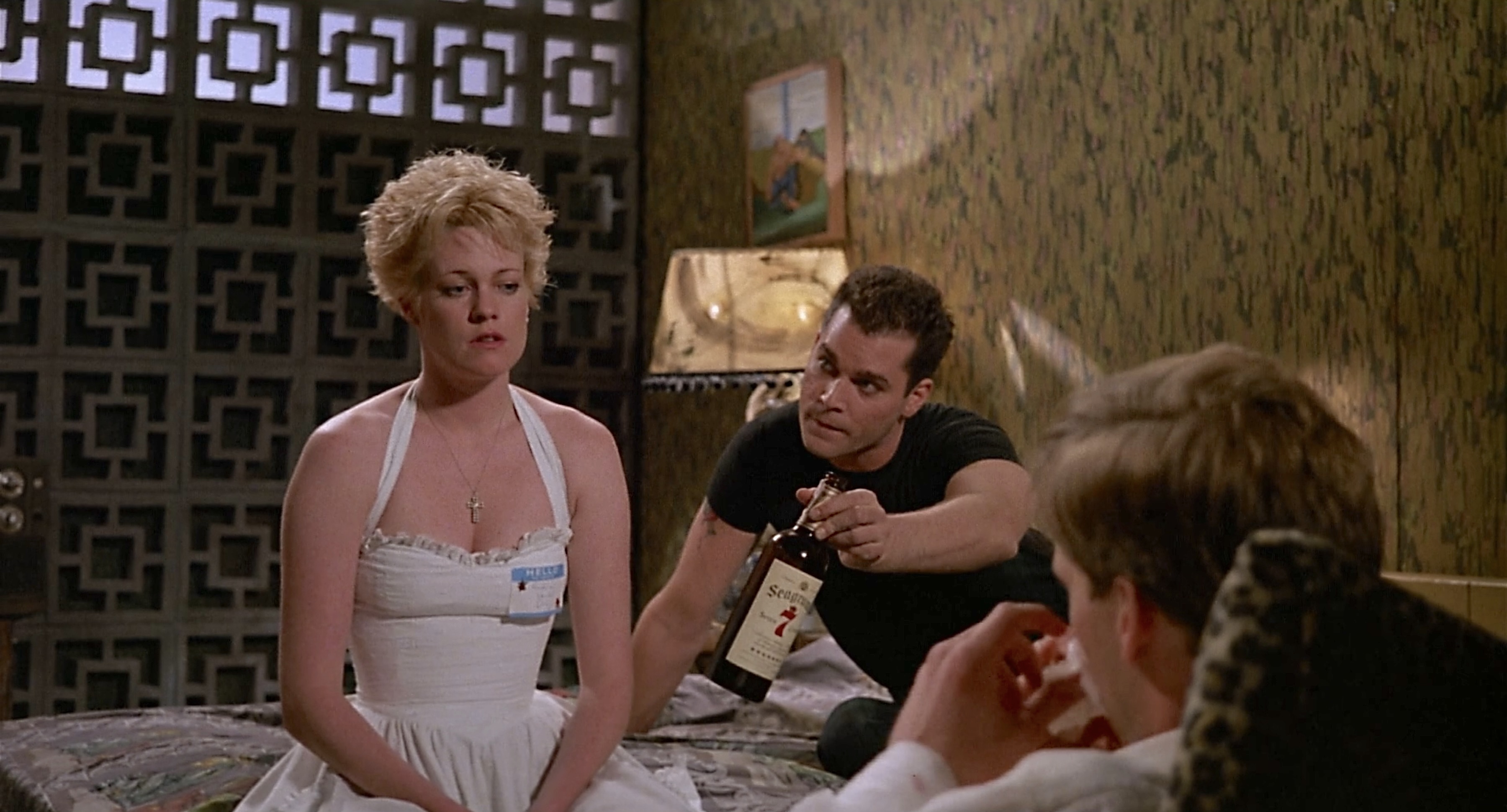
“We’re gonna have to make this a night to remember!”
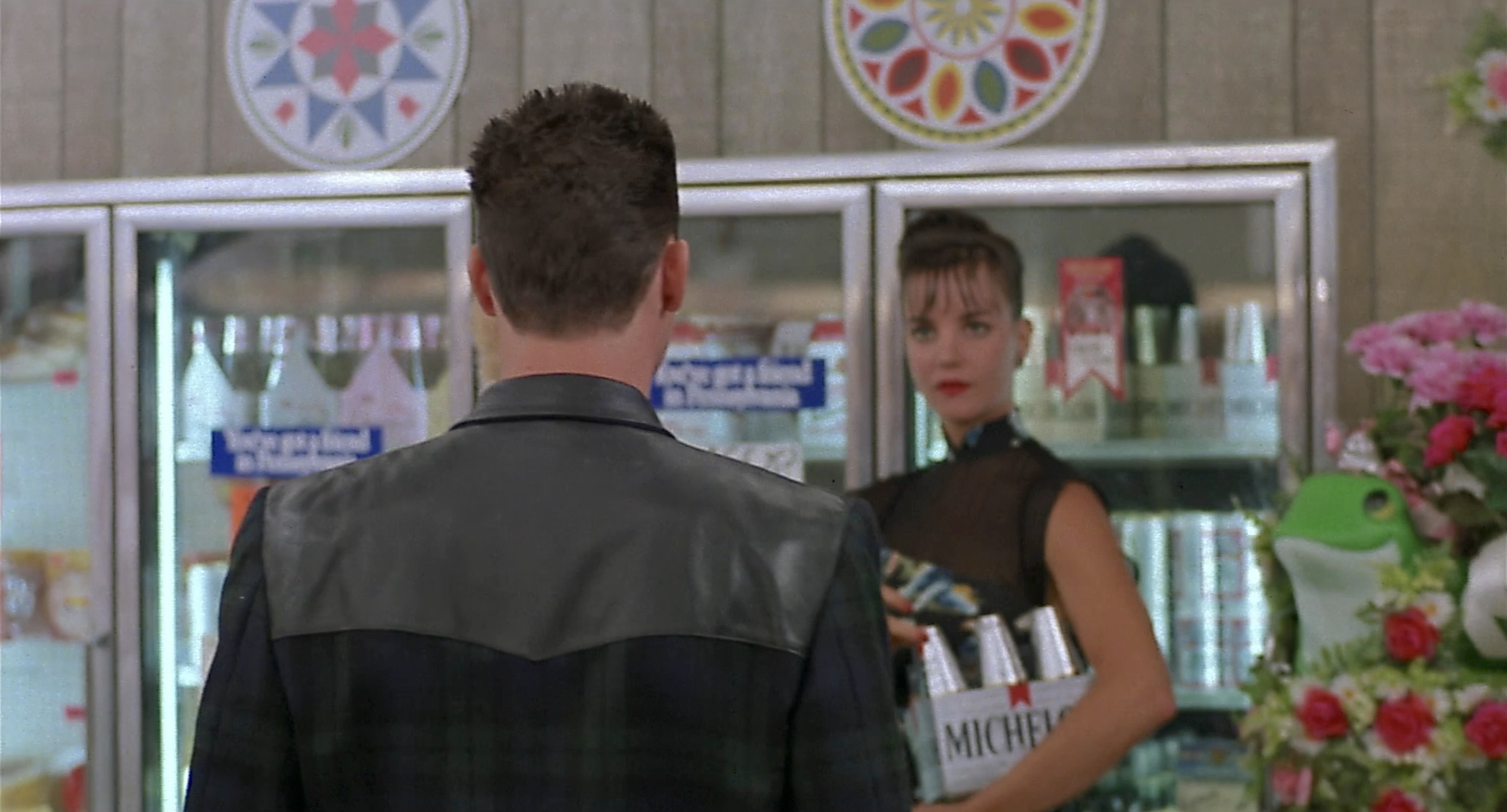
Ray and his soon-to-be-discarded date Irene (Margaret Colin) also buy a six-pack of Michelob beers from the gas station. Now best known for their low-carb flagship brew Michelob Ultra (which displaced Modelo as the best-selling beer in the United States in 2025), Michelob’s story dates to 1896 when Adolphus Busch began brewing this pale lager, named for the now-Czech town of Měcholupy and intended for “connoisseurs”. Despite its history, it wasn’t until the 1960s that Michelob began reaching national audiences after Anheuser-Busch pasteurized it for transportation and its teardrop-shaped bottle was awarded by the Institute of Design.
Michelob followed the demand for “diet beer” with the introduction of Michelob Light in 1978 and Michelob Ultra in 2002, as well as an expanding range of specialty and seasonal brews.
The Gun
Ray arms himself with a Smith & Wesson Model 59, an early example of the high-capacity 9mm semi-automatic pistols that would become known as “wonder nines”. Developed from the earlier Model 39 with input from the U.S. Navy, the Model 59 retained its predecessor’s design cues, traditional double-/single-action (DA/SA) trigger, and 9x19mm Parabellum chambering, but replaced its eight-round single-stack magazine with a staggered double-stack magazine holding fourteen rounds.
Smith & Wesson had begun experimenting with higher-capacity versions of the Model 39 during the 1960s, eventually developing stainless-steel prototypes for Navy SEAL evaluation. Though the Navy never formally adopted the design, Smith & Wesson recognized its commercial potential and introduced the Model 59 in June 1971. The production pistol paired a blued carbon steel slide with an anodized aluminum-alloy frame, keeping its unloaded weight to approximately thirty ounces despite the increased capacity.
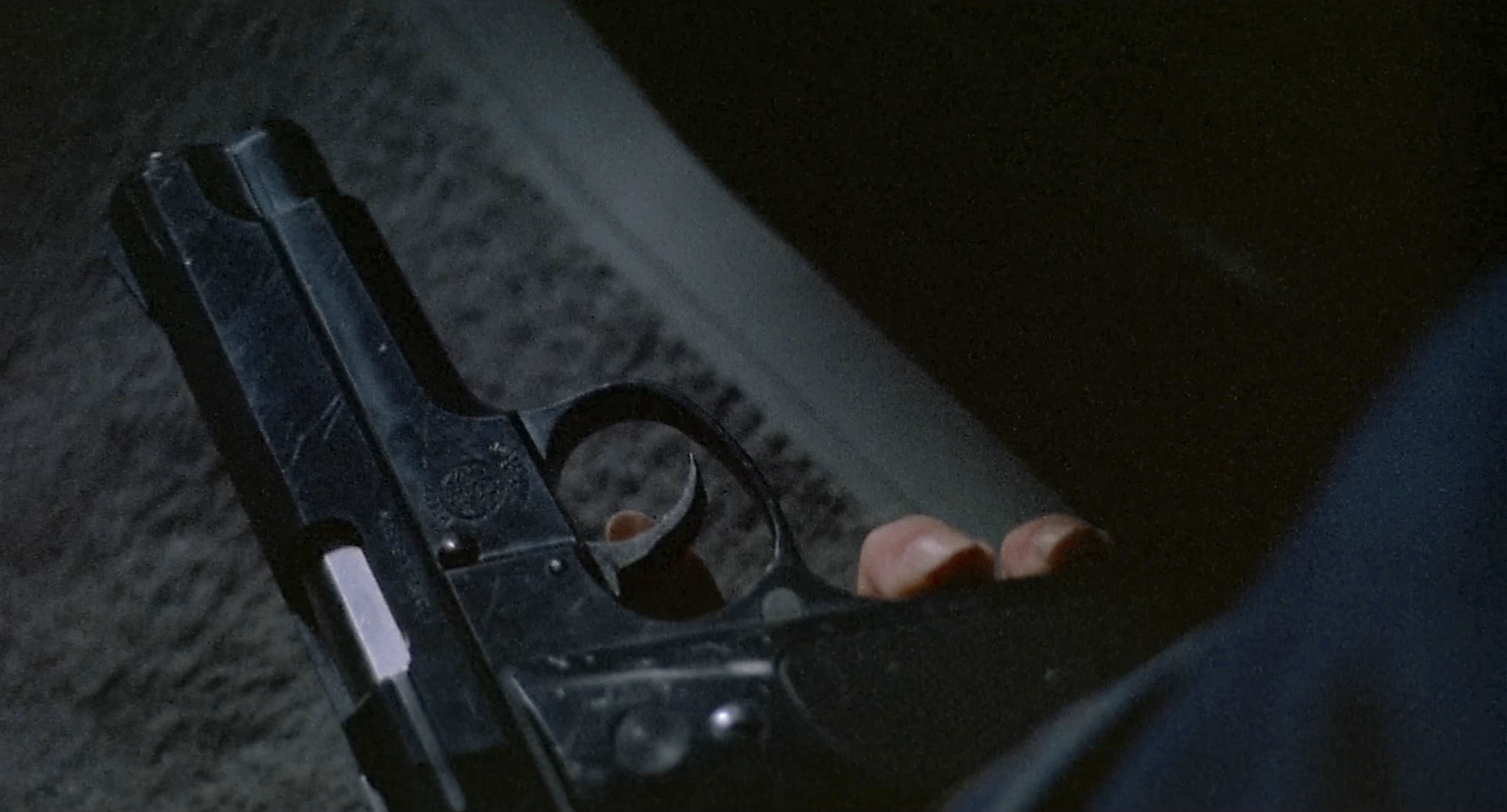
Ray’s Smith & Wesson Model 59 would have only been out of production a few years by the time Something Wild was made in 1986, but the slide and frame exhibit considerable finish wear.
More than 230,000 Model 59 pistols were manufactured before production ceased in 1982. By then, Smith & Wesson had begun introducing its second generation of semi-automatic pistols, distinguished by three-digit model designations that included the blued Model 459 and stainless Model 659—the latter prominently carried by the black-suited crooks in Reservoir Dogs (1992).
How to Get the Look
Ray Liotta in Something Wild (1986)
Ray Sinclair brings dangerous rockabilly swagger to his ten-year class reunion, subverting the traditional respectability of a Black Watch tartan suit with black leather Western accents, a muscle-hugging black tee, ornate belt buckle, and silver-tipped cowboy boots—a defiantly unconventional blend of 1950s rebellion and exaggerated 1980s tailoring.
- Navy-and-green Black Watch tartan plaid sport suit:
- Single-breasted jacket with black leather western yoke, notch lapels with black leather collar, slanted hip pockets with black leather jetting, and ventless back
- Flat-front trousers with belt loops, side pockets, jetted back pockets, and self-cuffed bottoms
- Black cotton crew-neck short-sleeved T-shirt
- Black leather belt and large silver-toned bird motif buckle with jade-green accents
- Black leather cowboy boots with bug-and-wrinkle stitching, silver pointed-toe caps, and silver heel plates
Do Yourself a Favor and…
Check out the movie.
The Quote
Come on, Charlie, you gotta admit—she looks like she could fuck you right in half.
Discover more from BAMF Style
Subscribe to get the latest posts sent to your email.
You must be logged in to post a comment.